New Building Siding: Understanding the Wavy Appearance
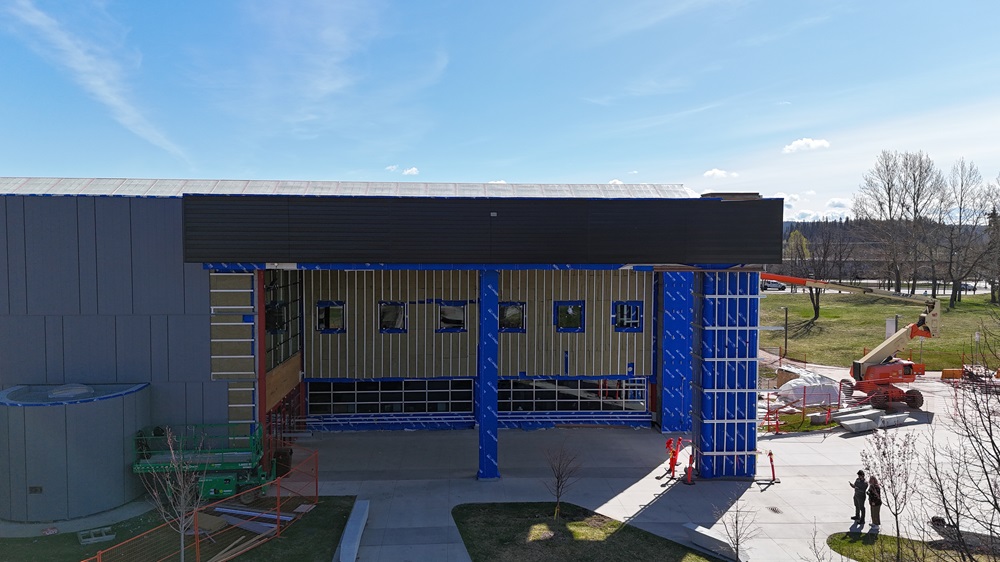
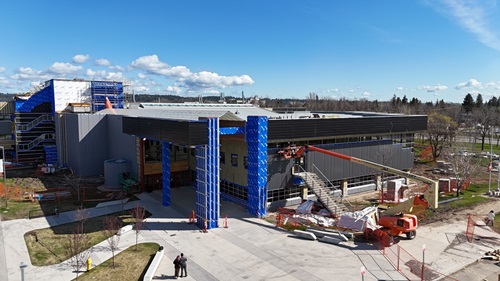
As part of the Prince George Campus Building Envelope Project, new metal siding has been installed to improve the durability, weather protection, and energy efficiency of campus buildings.
Some members of the campus community have noticed slight waviness or ripples in portions of the new siding. This effect is known as oil canning.
What is Oil Canning?
Oil canning is a visible waviness that can occur in flat metal panels. It is a common and widely recognized characteristic of modern metal cladding systems used on commercial, institutional, and educational buildings.
Oil canning can result from a combination of factors, including manufacturing processes, installation conditions, material properties, and environmental conditions such as temperature changes.
Does It Affect Building Performance?
No. Oil canning is a visual effect only. It does not affect the strength, safety, durability, or weather resistance of the siding. The cladding continues to perform as designed and meets project specifications and industry standards.
Why Is It More Noticeable at Certain Times?
The appearance of oil canning can change depending on sunlight, shadows, and viewing angles. It is often more noticeable when light hits the panels from certain directions.
Under different lighting conditions, the same panel may appear smooth and uniform.
Will It Change Over Time?
In many cases, the appearance becomes less noticeable over time as materials naturally expand and contract with seasonal temperature changes.
Project Quality and Oversight
The project team continues to monitor installation quality throughout the Building Envelope Project to ensure the work meets design specifications, industry standards, and performance expectations.
The observed appearance of the metal siding is consistent with typical outcomes for this type of system.
Questions?
If you have questions about the Building Envelope Project, please contact Facilities Services at Facilities@cnc.bc.ca.
More News