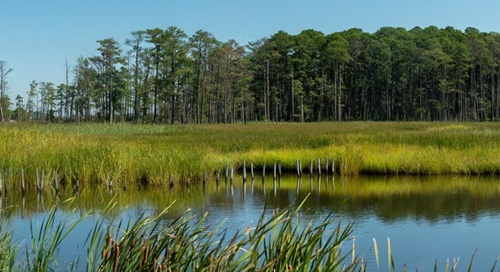
Wetlands provide habitat for a myriad of wildlife species including birds, amphibians, mammals, aquatic invertebrates and fish. This project aims to promote ecological awareness and habitat conservation for a small wetland identified by the Prince George Airport Authority. Using trail cameras, this project will identify wildlife use in and around the surrounding wetland habitat to aid in public awareness for wetland conservation. This project will provide education opportunities for the public on wildlife species and wetland conservation. All findings from this project will be provided to the Prince George Airport Authority, to whom CNC is providing research support. Findings from this project will be used in education purposes and to ensure proper protection of the wetland identified.
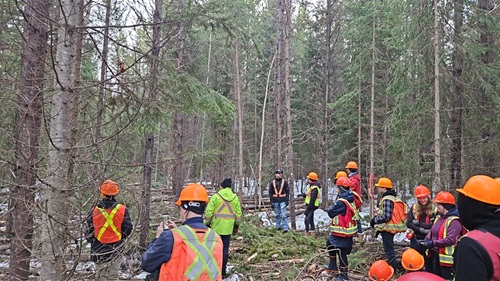
LiDAR is currently underutilized as a planning and assessment tool for silviculture practices in northern British Columbia, and this project aims to address that gap by developing simple, reliable protocols for capturing and using imagery and scanning products to improve both treatment planning and post‑treatment assessment. The approach uses aerial and terrestrial LiDAR to collect pre‑ and post‑treatment data and imagery, which are compared against detailed manual ground sampling, including timber cruising, vegetation and coarse woody debris transects, and fire fuel assessments. The project will identify which tree‑, stand‑, and site‑level attributes can be reliably derived from LiDAR and how these measurements can be applied operationally, while also evaluating the effectiveness of commercial thinning in meeting prescribed timber objectives and its effects over time. Overall, the work is intended to demonstrate the technical feasibility of integrating LiDAR into BC’s silviculture practices, with the expectation that increased efficiency and lower costs would support broader adoption of commercial thinning and deliver associated economic and environmental benefits.
Subalpine Fir Shelf-Life (Dendrochronology) Services
May 29, 2026
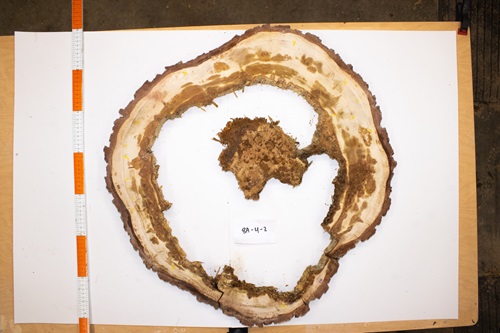
This study commissioned by the Ministry of Forests uses dendrocronology to determine the 'shelf life' of subalpine fir trees. Through careful analysis of tree rings under a microscope, we can determine the exact year of death, injury, or environmental disturbance such as drought or fire. Using this information, we are helping determine how long subalpine fir trees can remain dead and standing in the forest and still produce usable lumber, promoting sound salvage logging decisions.
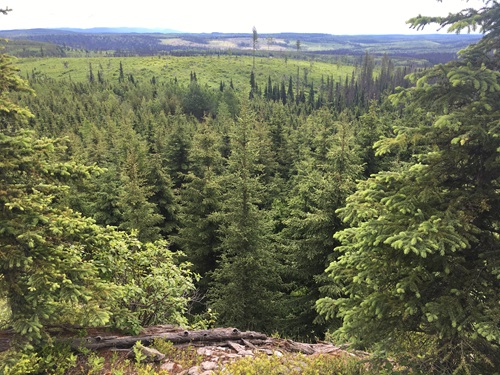
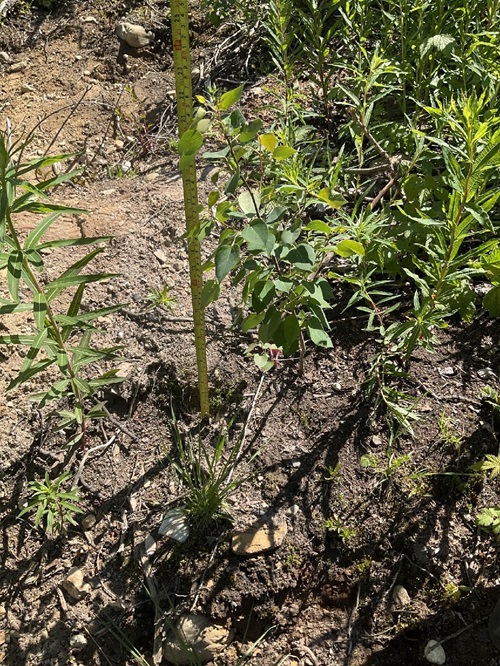
Reforestation after harvest is a legal obligation within the province of British Columbia, ensuring seedling survival, ecosystem diversity and sufficient stocking are common challenges forest managers face. The aim of these reforestation projects are to assess different treatments associated to seedling survival and sufficient stocking, as well as different species to enhance stand diversity. We are trialing multiple different projects focusing on seedling survival and stocking based on different stock type, species and site prep methods within the SBSwk1 biogeoclimatic subzone. The results gained from these studies will supplement understanding of the pros and cons of certain site preparation methods (mounding/screefing/prescribed burn), the variation of seedling establishment and survival of different stock sizes, including seedpods, and varying species (commercial conifer and native deciduous). Findings from this research will support forest management decisions to meet reforestation obligations, based on ecological and economical evidence.
With increasing climatic pressures, reforestation practices are experiencing more challenging conditions due to increasing temperatures and prolonged periods without precipitation, causing stress on seedlings and there survival. These trials are being administered to assess the survival of commercial conifer species planted outside their natural range to see their adaptability, suitability and survival to a change in climate and geography. We are trialing five different species on SBSwk1 and SBSdw3 biogeoclimatic subzones to collect data on survival and suitability. This work will generate information that will support a species distribution range as well as provide information on climatic influences that impact survival. Findings will support provincial research as well as forest management strategies for determining species distribution range.