Medical Radiography Technology Diploma
| Type | Full Time |
|---|---|
| Length | 2 years |
| Campus | Prince George |
| Delivery | In Class |
| Fees* |
Estimated at $21,205
International Check fee schedule
*All fees are an estimate. |
| Starting Semesters | Fall 2026 |
Fall 2026 Applications Closed
Applications for Fall 2027 will open in October of 2026.
We have a Medical Radiography Digital Information Session available for applicants to learn more about our program.
Overview
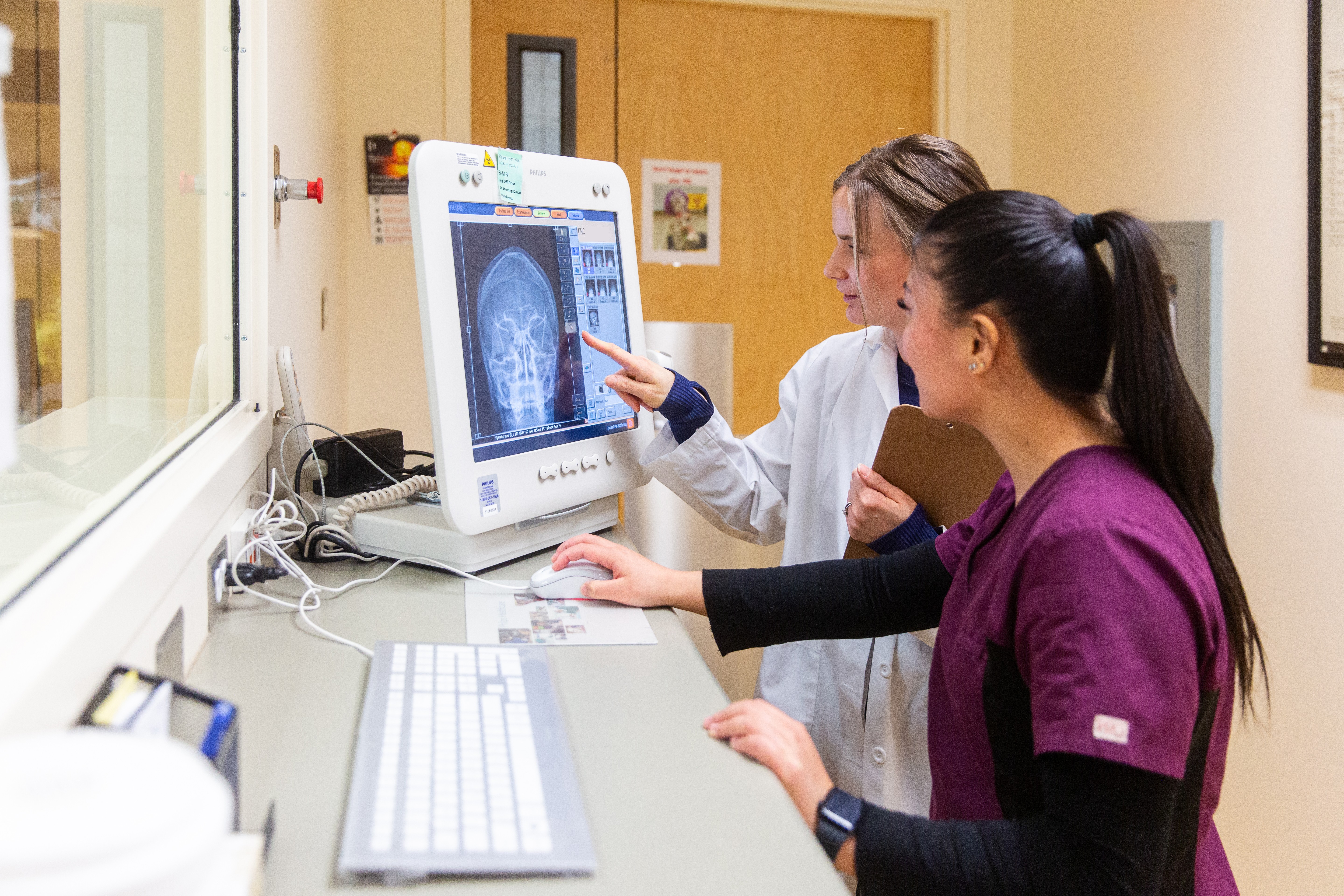
Are you looking for a rewarding career in the medical field with high opportunity? Enroll in the CNC Medical Radiography Technology (MRAD) program and become a Medical Radiation Technologist in only 2 years.
Medical radiography includes imaging technologies such as x-ray, computed tomography, mammography, fluoroscopy, and interventional procedures.
Medical radiography is suited for people with a strong sense of responsibility and interest in other people's well-being. People who thrive in medical radiography are able to work well with both technology and people, including patients and other medical professionals, in sensitive, stressful situations.
Careers
There is a growing demand for Medical Radiography Technologists (MRT's) due to technological advances and a growing, aging population. MRT's operate imaging equipment to capture radiographic images of patients' injuries and illnesses to help inform decisions made for diagnosis and treatment. As a Medical Radiation Technologist, you will be suited to work in the following areas:
- Hospitals (Medical Imaging department, patient bedsides, operating room or emergency department)
- Private imaging clinics
- Equipment vendor sales & applications
- Research
- Forensic labs
What you will learn
The Medical Radiography Technology program is a full, 2-year program that alternates between classroom/lab terms where you will learn theory and clinical field placements where you gain experience and applied skills.
Earning your diploma in medical radiography technology is a base for other certifications, such as advanced radiography certifications and specialized BSc and health administration degrees. These additional qualifications are a key component of health care service.
Courses
Required Courses
Typical Offerings
| Timing | Fall Only, Every Year |
|---|---|
| Locations | Prince George |
| Requisites |
|
Description
Students gain the technical knowledge required to operate radiographic and accessory equipment regarding image acquisition, processing, display and storage in the clinical environment. Topics include the structural design of radiographic system components (xray tube, table, bucky and generator) and factors that influence the quality of the resultant image (patient variables, exposure factors, beam geometry, equipment malfunction, display monitors, image algorithms and post-acquisition processing tools). Fluoroscopic equipment types, design, construction and image acquisition are discussed in depth.Typical Offerings
| Timing | Fall Only, Every Year |
|---|---|
| Locations | Prince George |
| Requisites |
|
Description
This course is designed to enhance human relation skills by exploring research, psychological, and sociological concepts that are relevant to medical imaging technologists. Topics include developing skills for interactions and communication with patients; preventing and managing distress; working with cultural diversity; respecting histories of First Nations, Inuit, and Metis peoples; dealing with clients' needs associated with age and abilities; mortality; managing interpersonal conflict and harassment. Topics focus on improving sensitivity when dealing with patients, the healthcare team, and one's self.Typical Offerings
| Timing | Fall Only, Every Year |
|---|---|
| Locations | Prince George |
| Requisites |
|
Description
This course parallels and supports topics presented in Relational Anatomy and Physiology MRAD I. The content is covered using digital patient images and anatomical models. The content provides an in-depth focus of the entire skeleton, the respiratory, digestive, biliary, and urinary systems with an introduction to the cranium. Patient images are introduced in a sectional presentation where applicable. This course also provides the anatomical information required for Radiographic Procedures I lecture, positioning, and critique sessions.Typical Offerings
| Timing | Fall Only, Every Year |
|---|---|
| Locations | Prince George |
| Requisites |
|
Description
This course prepares the student for their first clinical experience. Topics include essential elements of the general imaging department such as workflow, patient and departmental documentation, the role of the technologist in the workplace and their relationship with patients and other healthcare members. This includes acceptable behavior and professionalism in the Imaging department. The student becomes familiar with hospital/department administrative levels, workplace safety regulations (including radiation safety and WHMIS), incident/abuse reporting procedures, and medical information documentation requirements.Typical Offerings
| Timing | Fall Only, Every Year |
|---|---|
| Locations | Prince George |
| Requisites |
|
Description
This course is the first of three radiographic procedure courses that focuses on radiographic positioning, patient care, medicolegal documentation, image production, and diagnostic image quality. This course provides the theory and skills required to perform radiographic procedures of the appendicular skeleton, chest, abdomen, vertebral column, thoracic cage, and gastrointestinal system. Laboratory settings support theory with hands-on experience with radiographic equipment and image critiquing skills that prepare students for clinical practice.Typical Offerings
| Timing | Fall Only, Every Year |
|---|---|
| Locations | Prince George |
| Requisites |
|
Description
In this course, students develop critical thinking and manual patient care skills before, during and after imaging exams. Patient support equipment from emergency/trauma areas and operating and patients' rooms are introduced. Students gain skills in preparing sterile trays, vital signs, injectable medication, intravenous contrast/lines, vital signs, applying oxygen and ECGs. Various imaging scenarios regarding patient management of patients with disabilities (physical, mental and emotional), post-operative and critical/trauma care and patients with lines and tube attachments are enacted in laboratory.Typical Offerings
| Timing | Fall Only, Every Year |
|---|---|
| Locations | Prince George |
| Requisites |
|
Description
This introductory level course emphasizes the application of physical phenomena in medical radiography. Topics include structure of matter, electromagnetic radiation, electrostatics, direct and alternating current circuits, and production of x-rays. The physics of x-ray tubes, including heat dissipation, will also be discussed. Students relate the production of radiation and radiation exposure factors/settings to a resultant radiographic image.Typical Offerings
| Timing | Spring Only, Every Year |
|---|---|
| Locations | Prince George |
| Requisites |
|
Description
This course introduces students to general radiographic pathology and the specifics of bone pathologies. The students study commonly occurring bone fractures seen in the clinical environment. Emphasis is placed on recognizing fractures and the resultant changes required to adapting the patient care and exposure factors. Images demonstrating normal and pathological presentations enhance the theoretical component.Typical Offerings
| Timing | Spring Only, Every Year |
|---|---|
| Locations | Prince George |
| Requisites |
|
Description
This course will allow students to effectively apply radiation protection measures to patients, personnel, and members of the public. Radiation protection and the fundamental concepts of radiobiology are discussed in depth, including interaction with tissue, radiosensitivity, and early and late effects of radiation. Current standards for radiation protection as per Canadian Radiation Protection Safety Code, (SC 35) are introduced, describing the principles of radiation protection, the establishment of dose limits to patients, personnel and the public and various methods used to minimize radiation dose to both patients and personnel.Typical Offerings
| Timing | Intersession Only, Every Year |
|---|---|
| Locations | Prince George |
| Requisites |
|
Description
During this course, the gross anatomy, location, and anatomical relationships among organs within the abdominopelvic cavity are examined. These areas of study are integrated into a sectional imaging approach, where the body is viewed in body planes (axial, coronal, & sagittal sections). Conventional anatomical presentations are supplemented by images obtained from diagnostic imaging technologies. Physiology is presented where relevant and contributes an understanding of the structure and relationships among adjacent organs, body processes, functional imaging procedures, and important clinical considerations.Typical Offerings
| Timing | Fall Only, Every Year |
|---|---|
| Locations | Prince George |
| Requisites |
|
Description
This is the first of three courses examining human structure and function. Students examine body systems and relate them to nearby organs. Sectional anatomy of the body is viewed classically in axial, coronal, & sagittal planes and with images from various imaging modalities. Integration of physiology contributes to an understanding of structure; relationships among organs; fundamental body processes; and functional imaging and clinical procedures. Cell biology, homeostasis and examination of the integumentary, musculoskeletal, pulmonary, cardiovascular, and gastrointestinal systems are reviewed.Typical Offerings
| Timing | Intersession Only, Every Year |
|---|---|
| Locations | Prince George |
| Requisites |
|
Description
In this course, students study ethical matters and current and emerging issues in the Canadian healthcare system such as organizational change, resource management, departmental operation, and professionalism in the workplace. In addition, public versus private healthcare is reviewed. Ethical issues encountered in the current healthcare environment are studied by applying the ethical theories, the professional code of ethics, and standards of practice.Typical Offerings
| Timing | Intersession Only, Every Year |
|---|---|
| Locations | Prince George |
| Requisites |
|
Description
This course provides students with a basic skill set to perform Computed Tomography (CT) examinations. Emphasis is on the practical application and theoretical concepts of CT imaging. Best practices in safety and patient care are discussed. Students focus on basic CT protocols of the head, neck, chest, abdomen, pelvis, spine, and extremities. Cross-sectional anatomy in axial, sagittal, and coronal planes and image acceptability criteria are assessed. CT accessory equipment, contrast media and commonly occurring pathologies are described.Typical Offerings
| Timing | Spring Only, Every Year |
|---|---|
| Locations | Prince George |
| Requisites |
|
Description
This course emphasizes the application of physical phenomena in medical radiography. Topics include magnetism, nuclear reactions and radioactive decay, mechanisms of attenuation and their effects on radiation production. The elements of image production and quality are discussed relevant to quantum noise and spatial resolution. The physics of the x-ray generator is also discussed. Students cover the use of solid-state physics in modern imaging equipment. This course requires the students to perform precise measurement, graph plotting and data interpretation.Typical Offerings
| Timing | Spring Only, Every Year |
|---|---|
| Locations | Prince George |
| Requisites |
|
Description
This course studies the anatomy and physiology of the nervous, cardiovascular, and cardiopulmonary systems. It examines sectional anatomy of the head, neck, brain, circulatory system, and spinal cord in axial, coronal, and sagittal body planes. The cranial, thoracic, and abdominal/pelvic cavities are emphasized, and sectional anatomy demonstrates the relationships of the circulatory system to organs of the body and extremities. Integration of physiology contributes to an understanding of structure, relationships among organs, body processes, and functional imaging and clinical procedures.Typical Offerings
| Timing | Fall Only, Every Year |
|---|---|
| Locations | Prince George |
| Requisites |
|
Description
This course introduces students to the fundamentals of specialized and interventional procedures in medical imaging. Students focus on the anatomical and radiographic presentation of interventional examinations, patient care, and the technologist's role during these procedures. Students are introduced to breast imaging, bone mineral densitometry (BMD), angiography, and radiographic exams for gynecological, biliary, renal, gastrointestinal, cardiac, and musculoskeletal studies. Contrast media, pharmaceuticals, and interventional equipment and devices are also covered.Typical Offerings
| Timing | Fall Only, Every Year |
|---|---|
| Locations | Prince George |
| Requisites |
|
Description
This course introduces students to complementary imaging and related health disciplines such as nuclear medicine, sonography, magnetic resonance, cardiology, radiation therapy, nursing, and medical laboratory. Similar to medical radiography, these professions contribute to the patients' overall diagnosis and treatment planning which gives the students a more holistic understanding of the healthcare team and patients' overall medical circumstances. Students have the opportunity to job shadow one of these healthcare professions to enhance their understanding of collaborative health practice.Typical Offerings
| Timing | Spring Only, Every Year |
|---|---|
| Locations | Prince George |
| Requisites |
|
Description
This course parallels and emphasizes topics presented in Relational Anatomy and Physiology III (BIO 226). Content includes key radiographic structures of the cardiovascular, respiratory, and nervous systems, cranium, neck, thorax, spine, abdomen, pelvis, and extremities. The cranium content of this course provides the anatomical information required for Radiographic Procedures III lecture, positioning, and critique laboratory sessions. Additional content includes identifying key anatomical structures on sectional images in axial, coronal, and sagittal planes.Typical Offerings
| Timing | Spring Only, Every Year |
|---|---|
| Locations | Prince George |
| Requisites |
|
Description
This is the third installment of the Radiographic Procedure courses. Students build on their knowledge from previous courses and clinical practice. The focus is on higher acuity examinations of the skeleton, scoliosis and cranium exams, and contrast studies. Students practice in laboratory and clinical settings and obtain certification in venipuncture in preparation for Computed Tomography (CT) intravenous contrast administration. Students perform emergency/trauma and operating room procedures and continue building their skills in critiquing images for diagnostic acceptability.Typical Offerings
| Timing | Spring Only, Every Year |
|---|---|
| Locations | Prince George |
| Requisites |
|
Description
This course explores the structure and function of specialized x-ray tubes including recent innovations in digital tomosynthesis, digital radiography, digital mammography, digital fluoroscopy and Picture Archiving and Communication Systems (PACS), including the goals of Integrating the Healthcare Enterprise (IHE). The student gains knowledge of quality control (QC) and quality assurance (QA) programs and implement testing in the laboratory setting. Tests include computed and digital radiography (CR and DR), fluoroscopy and mammography, which reference the Canadian Health & Safety Code 35.Typical Offerings
| Timing | Spring Only, Every Year |
|---|---|
| Locations | Prince George |
| Requisites |
|
Description
MRAD 247 introduces the skills required to communicate professionally with colleagues, medical professionals, patients and caregivers. Students learn to utilize effective communication strategies to communicate with high professional standards. Students learn the essentials of academic research. This research knowledge is applied by researching a health care related topic and presenting the results; demonstrating best practices in the application of research methodologies relevant to practice.Typical Offerings
| Timing | Spring Only, Every Year |
|---|---|
| Locations | Prince George |
| Requisites |
|
Description
This course builds on Pathology 1 by providing theory describing complex bone pathologies resulting from trauma and disease. Emphasis is placed on discerning between benign versus malignant bony pathologies. The focus of this course is commonly occurring pathological processes and their radiographic presentations of the following anatomical systems: respiratory, gastrointestinal, urinary, reproductive, cardiovascular, nervous, hematopoietic, and endocrine.Typical Offerings
| Timing | Spring Only, Every Year |
|---|---|
| Locations | Prince George |
| Requisites |
|
Description
This course deals with the technological aspects of Computed Tomography (CT). The physical principles are described followed by a description of data acquisition concepts, the fundamentals of image reconstruction and data display and storage. This course also discusses the technical principles and applications of multi-slice/detector CT (MSCT/MDCT); in particular, important concepts such as the development of emerging CT technology. The course also includes an overview of CT image quality, radiation dose, and quality control (QC).Typical Offerings
| Timing | Intersession Only, Every Year |
|---|---|
| Locations | Prince George |
| Requisites |
|
Description
This course builds upon the core CNC Medical Radiography Program curriculum, allowing students to integrate and synthesize the knowledge, skills and judgments gained. The students use academic learning tools to solidify understanding and further develop critical thinking skills towards making informed decisions in the clinical setting. Through guided self- study and assessments, the students develop effective study skills to prepare for the Canadian Association of Medical Radiography Technologists (CAMRT) certification examination and improve necessary analytical skills required in clinical settings.Required Clinicals
Typical Offerings
| Timing | Spring Only, Every Year |
|---|---|
| Locations | Prince George |
| Requisites |
|
Description
This is the first of three clinical education courses. The students are provided with ample opportunities to apply their patient care and positioning skills. Students become both competent and confident in the imaging workplace. The focus is on attaining competencies on procedures of the entire skeleton (excluding cranium), chest, abdomen, gastrointestinal system, fluoroscopy and operating room procedures.Typical Offerings
| Timing | Fall Only, Every Year |
|---|---|
| Locations | Prince George |
| Requisites |
|
Description
This is the second of three clinical education courses. Students are provided with opportunities to become both competent and confident in a different imaging department. Students continue to work on their patient care and positioning skills. The focus is on attaining competencies on procedures of the entire skeleton (excluding cranium), chest, abdomen, gastrointestinal system, fluoroscopy, and operating room procedures. In addition, students gain experience in computed tomography (CT), bone mineral density (BMD), mammography, and interventional procedures.Typical Offerings
| Timing | Intersession Only, Every Year |
|---|---|
| Locations | Prince George |
| Requisites |
|
Description
This is the last of three clinical education courses. The students refine their skills obtained during their previous clinical experiences. Students are scheduled in all areas related to patient imaging practice. Students are required to demonstrate competency on all general and specialized imaging procedures and to demonstrate competency on patient cases of all acuity levels.Entry Requirements
Entry Requirements
Fall 2027 Intake and Onwards
For applications to the Fall 2027 intake (September start), you must meet the following requirements:
- The following courses, completed with an average GPA of 3.0 (“B”) with no grade lower than a “C+”:
- Anatomy and Physiology 12, or BIO 050, or
- English Studies 12, English First Peoples 12, ENGL 050, ENGL 051, or
- Foundations of Math 12, or
- Physics 12, PHYS 050, or
English Language Proficiency Requirements
Candidates whose first language is not English must meet the English requirements and provide proof of English language proficiency through one of the following:
- Test of English as a Foreign Language (TOEFL iBT) score of 4.5 overall with no section less than 4.0 or equivalent, within the last two years; OR
- International English Language Testing System- Academic (IELTS Academic) score of 6.5 overall with no band below 6.0, taken within the last two years; OR
- A 3-credit post-secondary-level English, Communications, Creative Writing, or Literature course with a minimum “B-” grade, taken at a post-secondary institution located on the approved English-speaking country list.
Program Specific Requirements
Completed career investigation and participation in an MRAD program information session.
Completed acceptance package must be submitted by the date indicated in the package. Incomplete certifications and documentation will prevent students from entering clinical practice placements. Practicum is required for graduation. All certifications must remain valid throughout the program.
- Successful completion of MRAD 100: Medical Radiography Terminology course (approximately 10 hours of self-directed learning), which has a radiography language focus
- Proof of immunization status as outlined by the BC Centre for Disease Control and as outlined in the Practice Education Guidelines BC Immunization. See Practice Education Guidelines.
- Personal data sheet and release of information form
- Cardiopulmonary Resuscitation (CPR), Level C, or Basic Life Support (BLS). CPR online courses must include face-to-face practice components.
- FIT tested for a N95 respirator.
- Criminal Record Check (RCMP criminal record checks are not accepted)
Students must complete a provincial Schedule B criminal record search because there is a practicum component involving work with vulnerable people.
Note 1: MRAD information sessions are offered throughout the year for interested applicants.
Note 2: Self-identified Canadian Aboriginal applicants who meet the admission requirements by the priority deadline will be given priority for two seats.
Need help meeting these requirements? Check out our options.
Limited admission
If there is room in the program, you will be accepted once you have met all the admission requirements. This is called “first qualified, first accepted.” If you qualify after the program is full, you will be put on a wait list.
Self-identified Canadian Aboriginal applicants meeting the admission requirements will be given priority for 20% of seats in the program until the institutionally recognized date.
| Type | Campus | Starts | Status |
|---|---|---|---|
|
|
|
Applications Closed |
Invest in your future
The estimated cost for this program is $21,205. Check the for more details.
These costs are an estimate and do not include books. Costs may change without notice. Student fees vary by campus. Books for this program can be purchased from the bookstore.
Paying for college
We're here to help. You can apply for scholarships and bursaries through CNC. We can also help you find loans and other funding.
Recruitment and Retention Bursary
As a student enrolled in the Medical Radiography Technology Diploma you may be eligible for the recruitment and retention bursary. This bursary is awarded to first year students for a grand total up to $2000.
How do I apply?
This bursary does not require an application and will be distributed as a tuition credit.
Do I qualify?
You may qualify for the bursary if you:
- Are a Canadian Citizen or Permanent Resident
- Do not have your tuition already being paid by a third party (employer, other government programs, etc,)
- Have student loans.
Salaries and employment
Looking for a job? Check the student employment opportunities.