Medical Laboratory Technology Science Diploma
| Type | Full Time |
|---|---|
| Length | 2 years or more |
| Campus | Prince George |
| Delivery | In Class |
| Fees* |
Check fee schedule
International Check fee schedule
*All fees are an estimate. |
| Starting Semesters | Spring 2027 Spring 2026 |
Overview
Are you a detail and accuracy-oriented individual looking for a career in the health care sector? Become a Medical Laboratory Technologist by enrolling in this two and a half year program.
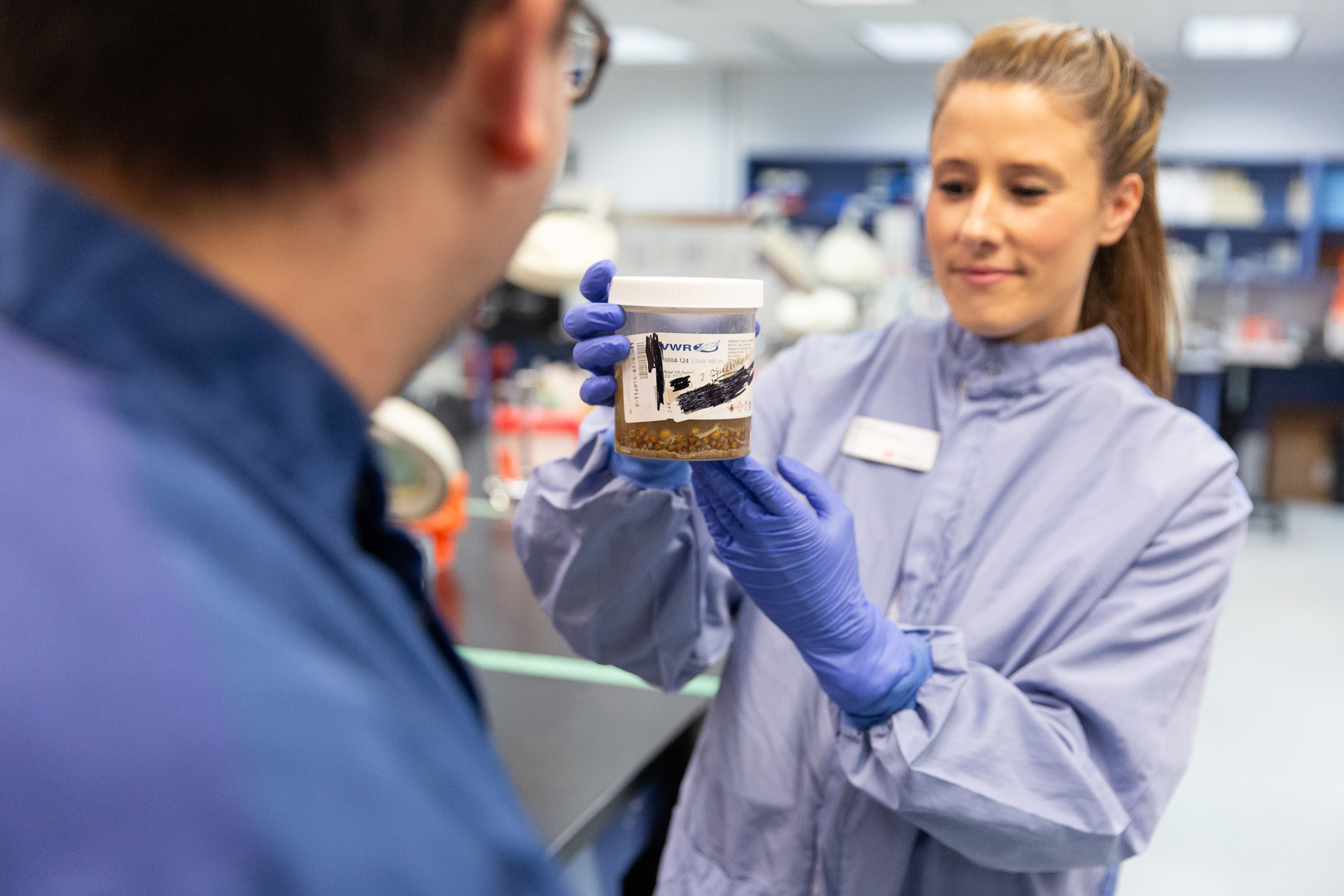
As a medical laboratory technologist, you will be part of a team of clinical heath care professionals. In this program, you will learn to perform a variety of specialized tests using high-tech equipment that assists physicians in diagnosis, treatment and prevention of disease in patients.
What you will learn
Upon completion of this program, you will have the specialized knowledge and skill to confidently perform the following duties:
- Draw blood samples from patients
- Prepare a wide variety of sample types for analysis such as blood, body fluids, tissue samples and culture swabs
- Perform the requested testing procedures using a range of testing techniques. Examples: use an automated analyzer to perform chemical measurements; identify cells and bacteria visually using a microscope
- Interpret and validate test results based on a quality assurance system
- Uphold the ethics and standards of the profession while delivering safe, responsible and culturally aware care
- Interact effectively with other healthcare professionals
Skill development is achieved through a combination of classroom and lab activities as well as an extensive hospital practicum placement.
Completion of the MLTS program ensures you meet the professional competency requirements of the Canadian Alliance for Medical Laboratory Professionals Regulators. It enables you to write the national certification exam for medical laboratory professionals in the following fields of practice: hematology, chemistry, microbiology, transfusion medicine and histology.
Career Paths
Upon completion of this program, you will be able to work in a lab setting in a variety of fields. These fields include:
- Anatomical Pathology
- Clinical Chemistry
- Hematology
- Microbiology
- Transfusion Medicine
Learning Experience at CNC
This program is comprised of three semesters and then a 39-week clinical practicum, where you will work on site for your program.
Semester 1
Learn some foundations about medical terminology, laboratory medicine, anatomy, and the essentials to start your career path.
Semester 2
Explore more topics that will build upon the first semester, such as hematology and clinical chemistry. These skills will set you up for work in a clinical environment.
Semester 3
Explore more advanced topics in the main lab fields, such as microbiology and clinical chemistry and prepare for your practicum.
Practicum
During your practicum, you will take the skills you learned throughout your first three semesters and put them into practice. You will be assigned to a hospital in B.C., gaining real-world experience as you learn from the medical laboratory staff.
Practicum Placement
CNC arranges clinical placements for each student. Clinical placements are located across B.C. at accredited medical laboratories in:
- Northern Health
- Interior Health
- Vancouver Island Health
Clinical placement site assignment is done through an automated matching program. You may rank sites based on preference, however, there is no guarantee that you will receive a clinical site assignment from your list of preferred sites. Therefore, be prepared to attend a clinical practicum anywhere in B.C.
Some sites require travel to a secondary site to complete all required clinical rotations.
Placements will be made based on site capacity and placement requests received. You may be scheduled for days, evenings, or night shifts, as determined by the clinical site.
All travel and accommodation costs are the responsibility of the student.
Post-Graduation
After graduating from the program, you are eligible to take the national certification exam. For more information on the complete exam bundle (hematology, chemistry, microbiology, histology, and transfusion medicine) cost and how to take it, visit the Canadian Alliance of Medical Professionals Regulators (CAMLPR) website.
Courses
As a medical laboratory technologist, you'll perform a variety of specialized tests using high-tech instrumentation to help medical practitioners diagnose, treat, and prevent disease. Professional responsibilities include collecting and preparing specimens for analysis; testing blood, body fluids, tissue samples; and interpreting results. You'll work independently, but as an important part of the health-care team. Educational opportunities include a PostDiploma Bachelor of Science in Medical Lab Technology a Bachelor of Health Sciences. Post-diploma professional development is also offered locally, provincially, and nationally. CNC's Medical Laboratory Technology Science Diploma program is fully accredited. After graduating, you'll be eligible to write the CSMLS national examination to become professionally certified, which qualifies you to work as a medical laboratory technologist anywhere in Canada.
Typical Offerings
| Timing | Spring Only, Every Year |
|---|---|
| Locations | Prince George |
Description
This course is designed to provide the student with the basic fundamentals of medical terminology in both written and spoken forms. Mastery of word parts and building skills will aid the student in understanding medical terminology and anatomical relations. Medical terminology of the organization of the body, to include integumentary, musculoskeletal, digestive, cardiovascular, respiratory, urinary, reproductive, and nervous systems will be studied along with the special senses and the endocrine system.Typical Offerings
| Timing | Spring Only, Every Year |
|---|---|
| Locations | Prince George |
| Requisites |
|
Description
Microbiology and Infection Prevention introduces the student to clinical microbiology and infectious diseases including a brief history of microbiology and introduction to bacterial genetics and metabolism. Disinfection and antimicrobial treatment are introduced. Immunology and the body's response to foreign substances is introduced. Common Gram positive cocci that are often involved in human diseases are covered.Typical Offerings
| Timing | Spring Only, Every Year |
|---|---|
| Locations | Prince George |
| Requisites |
|
Description
This course introduces clinical laboratory elements including basic equipment, interpersonal communication in a healthcare setting, and laboratory specimen collection. Specimen handling and transportation to ensure the quality of laboratory results is discussed. Some of the topics covered are: laboratory glassware, pipettes, balances, centrifuges, microscopes, calculations and safety, as well as teamwork, grief and loss, and determinants of health. Emphasis will be on the collection of blood specimens and practice in venous collection on adults and capillary collection will be provided.Typical Offerings
| Timing | Spring Only, Every Year |
|---|---|
| Locations | Prince George |
| Requisites |
|
Description
This course develops the student's understanding of the structure and function of organs and systems in the normal human body. A study of basic chemical principles is included. Medical terminology will be expanded and concepts of pathology introduced. Lab exercises will develop the ability to recognize cellular and noncellular components in body systems.Typical Offerings
| Timing | Spring Only, Every Year |
|---|---|
| Locations | Prince George |
| Requisites |
|
Description
This course is designed to provide individuals with an overview of factors affecting quality in laboratory testing. This includes covering quality system essentials, other quality assurance programs, and quality control techniques used to validate test results. This course contains a research component focused on quality systems.Typical Offerings
| Timing | Spring Only, Every Year |
|---|---|
| Locations | Prince George |
| Requisites |
|
Description
This course focuses on the principles commonly used for quantitative analysis in clinical laboratories. It will introduce the student to the principles and applications of light measuring systems, electrochemistry, electrophoresis, chromatography, osmometry, immunoassay, mass spectrometry and particle analysis.Typical Offerings
| Timing | Fall Only, Every Year |
|---|---|
| Locations | Prince George |
| Requisites |
|
Description
An introduction to the principles and practices of preparing clinical specimens for histological examination. Topics covered includes: preparation of specimens for examination, fixation; preparation of tissue in wax blocks and application of the wax embedded tissue onto slides.Typical Offerings
| Timing | Spring Only, Every Year |
|---|---|
| Locations | Prince George |
| Requisites |
|
Description
This course provides an overview of the techniques used to demonstrate cellular and non- cellular components for microscopic examination. Students will perform the techniques and evaluate the results.Typical Offerings
| Timing | Fall Only, Every Year |
|---|---|
| Locations | Prince George |
| Requisites |
|
Description
Microbiology II expands the number of microorganisms ad covered in MLTS 110. The body sites and infections involved are also expanded. Antimicrobial treatment are expanded. Common Gram negative bacilli that are often involved in human diseases are covered. The student continues to practice the safe lab practices learned in MLTS 110.Typical Offerings
| Timing | Spring Only, Every Year |
|---|---|
| Locations | Prince George |
| Requisites |
|
Description
Microbiology III expands the number of microorganisms as covered in MLTS 110 and MLTS 143. The body sites and infections involved are also expanded. Antimicrobial testing is covered in detail. Gram positive bacilli, anaerobes, and spirochetes that are often involved in human diseases are covered. The student continues to practice the safe lab practices learned in MLTS 110.Typical Offerings
| Timing | Fall Only, Every Year |
|---|---|
| Locations | Prince George |
| Requisites |
|
Description
This course is a study of the production and function of the normal blood cells: erythrocytes, leukocytes and platelets. The laboratory sessions include microscopic evaluation of blood films as well as some of the procedures routinely performed in the clinical laboratory to evaluate blood cells.Typical Offerings
| Timing | Spring Only, Every Year |
|---|---|
| Locations | Prince George |
| Requisites |
|
Description
Hematopathology Section I is a study of the pathophysiology of various leukemias as related to the laboratory involvement in diagnosis and treatment. Special tests used for differential diagnosis are included. Hematopathology Section II is the pathophysiology of various anemia as related to laboratory involvement in diagnosis and treatment. Special tests used for differential diagnosis are included. Information in both sections is applied to the detection of analytical discrepancies and ensuring timely, valid results.Typical Offerings
| Timing | Fall Only, Every Year |
|---|---|
| Locations | Prince George |
| Requisites |
|
Description
This course will provide the knowledge and skills required to perform selected tests in clinical chemistry. The clinical significance and methods of analysis of various chemical constituents in biological specimens will be covered. During laboratory sessions, students will perform techniques to assay various biochemical constituents in blood and body fluids. Recognizing the relationship between analyses, diagnoses, clinical information will be emphasized.Typical Offerings
| Timing | Spring Only, Every Year |
|---|---|
| Locations | Prince George |
| Requisites |
|
Description
This course will allow students to build on the knowledge and skills learned in Clinical Chemistry I. The clinical significance and methods of analysis of additional chemical constituents in biological specimens will be covered. During laboratory sessions, students will perform techniques to assay various biochemical constituents in blood and body fluids. Recognizing the relationship between analysis, diagnosis, clinical information and treatment will be emphasized.Typical Offerings
| Timing | Fall Only, Every Year |
|---|---|
| Locations | Prince George |
| Requisites |
|
Description
This course provides the student with an introduction to the principles of molecular techniques and the practical applications of this technology in a diagnostic laboratory. Topics include, DNA/RNA isolation, hybridization, polymerase chain reaction, and restriction enzyme analysis.Typical Offerings
| Timing | Fall Only, Every Year |
|---|---|
| Locations | Prince George |
| Requisites |
|
Description
This course involves the study of immunology, the theory of genetics, blood donations, and red cell blood group systems as they apply to the testing of blood for transfusion purposes. The detection, treatment and prevention of Hemolytic Disease of the Newborn is also covered. Laboratory exercises provide practical experience and complement the theory.Typical Offerings
| Timing | Spring Only, Every Year |
|---|---|
| Locations | Prince George |
| Requisites |
|
Description
This course involves the study of immunology, the theory of genetics, blood donations, and red cell blood group systems as they apply to the testing of blood for transfusion purposes. The detection, treatment and prevention of Hemolytic Disease of the Newborn is also covered. Laboratory exercises provide practical experience and complement the theory.Typical Offerings
| Timing | Spring Only, Every Year |
|---|---|
| Locations | Prince George |
| Requisites |
|
Description
This course will prepare the students for the acceptance by the practicum site. Required on line courses will be completed and fit testing performed. Orientation to the practicum booklets and instructor expectations in practicum will be discussed.Typical Offerings
| Timing | Intersession Only, Every Year |
|---|---|
| Locations | Prince George |
| Requisites |
|
Description
This course reviews and expands the student's theoretical knowledge of Histotechnology through tutorials and exams. This course also covers the practical component of Histotechnology through work experience in a clinical laboratory.Typical Offerings
| Timing | Intersession Only, Every Year |
|---|---|
| Locations | Prince George |
| Requisites |
|
Description
This course reviews and expands the student's theoretical knowledge of microbiology through tutorials, worksheets, case studies and exams. This course also covers the practical component of microbiology through work experience in a clinical laboratory.Typical Offerings
| Timing | Intersession Only, Every Year |
|---|---|
| Locations | Prince George |
| Requisites |
|
Description
This course reviews and expands the student's theoretical knowledge of hematology through tutorials, case studies and exams. This course also covers the practical component of hematology through work experience in a clinical laboratory.Typical Offerings
| Timing | Intersession Only, Every Year |
|---|---|
| Locations | Prince George |
| Requisites |
|
Description
This course reviews and expands the student's theoretical knowledge of clinical chemistry through tutorials, worksheets, case studies and exams. This course also covers the practical component of clinical chemistry through work experience in a clinical laboratory.Typical Offerings
| Timing | Intersession Only, Every Year |
|---|---|
| Locations | Prince George |
| Requisites |
|
Description
Major topics covered are blood collection, safe work practices, and professionalism. Students will practice the collection, handling, transportation and processing of various laboratory specimens to help ensure the quality of laboratory results. Emphasis will be on the collection of blood specimens, and practice in venous collection on adult and capillary collection will be provided.Typical Offerings
| Timing | Intersession Only, Every Year |
|---|---|
| Locations | Prince George |
| Requisites |
|
Description
This course reviews and expands the student's theoretical knowledge of transfusion science through case studies, worksheets and exams. This includes the principles of immunology, quality control procedures, red blood cell antigens and antibodies, and adverse transfusion reactions. This course also covers the practical component of transfusion science through work experience in a clinical laboratory. This includes performing quality control procedures, the detection of antigens and antibodies, identifying common red blood cell antigens and antibodies, preparing and issuing blood products, and recognizing and investigating adverse transfusion reactions.Entry Requirements
Entry Requirements
Spring 2027 Intake and Onwards
For applications to the Spring 2027 intake (January start), you must meet the following requirements:
- The following courses, completed with an average GPA of 3.0 ("B") with no grade
lower than a "C":
- Anatomy and Physiology 12, or BIO 050, or
- Chemistry 12, or CHEM 050, or
- English Studies 12, or English First Peoples 12, or ENGL 050, or ENGL 051, or
- Foundations of Math 12, or
English Language Proficiency requirements
Candidates whose first language is not English must meet the English requirements and provide proof of English language proficiency through one of the following:
- Test of English as a Foreign Language (TOEFL iBT) score of 4.5 overall with no section less than 4.0 or equivalent, within the last two years, OR
- International English Language Testing System-Academic (IELTS Academic) score of 6.5 overall with no band below 6.0, taken within the last two years, OR
- A 3-credit post-secondary-level English, Communications, Creative Writing, or Literature course with a minimum “B-“ grade, taken at a post-secondary institution located on the approved English-speaking country list.
Need help meeting these requirements? Check out our options.
Limited admission
If there is room in the program, you will be accepted once you have met all the admission requirements. This is called “first qualified, first accepted.” If you qualify after the program is full, you will be put on a wait list.
Self-identified Canadian Aboriginal applicants meeting the admission requirements will be given priority for 20% of seats in the program until the institutionally recognized release date.
Program Requirements
Completed acceptance package must be submitted by the date indicated in the package. Incomplete certifications and documentation will prevent students from entering clinical practice placements. Practicum is required for graduation. All certifications must remain valid throughout the program.
- Participate in an MLTS program information session
- Students are asked to adhere to guidance for recommended vaccinations for healthcare workers and report immune status per the provincial Immune Status Reporting for Health-Care Workers.
- Criminal Record Check (RCMP criminal record checks are not accepted) Students must complete a provincial Schedule B criminal record search because there is a practicum component involving work with vulnerable people. A search which identifies relevant criminal convictions may prevent students from registering for practicum. To graduate from the MLTS program, each practicum must be successfully completed.
Note 1: All costs associated with certifications, courses and/or documentation requirements are the student’s responsibility.
Note 2: May be required to travel for practicum placements.
| Type | Campus | Starts | Status |
|---|---|---|---|
|
|
|
Open for Applications |
|
|
|
Open for Applications |
Invest in your future
The MLTS program includes a clinical practicum at sites across British Columbia and the Northwest Territories. The costs for travel and accommodation for clinical placements are the responsibility of the student.
The estimated cost per semester $3625. Off campus placement is $12,559.
These costs are an estimate. Student fees vary by campus. Check the for more details.
Books for this program can be purchased from the bookstore.
Miscellaneous items required for the laboratory activities include:
- White lab coat
- Safety glasses
- Non-skid, fluid impermeable footwear
Also recommended is a tablet or laptop to facilitate participation in classroom activities.
Paying for college
Financial planning is an important aspect of preparation for the program and MLTS applicants should be aware of the financial considerations of participation. The workload is heavy, leaving little opportunity for outside work while being a student in the program.
Please review these important considerations:
- The MLTS program includes a 39-week clinical practicum in second year.
- The MLTS program has clinical sites across BC – this includes Northern Health, Interior Health and the Vancouver Island Health authorities. Most sites require travel to a secondary site to complete all required practicum rotations.
- Students must be prepared to attend a clinical practicum anywhere in BC.
- Students must pay for their own travel and living expenses during clinical practicums.
- Clinical practicums are not paid positions.
- The program is eligible for student loans - you can also investigate other financial options, such as student lines of credits at various banking institutions, if necessary.
We're here to help. You can apply for scholarships and bursaries through CNC. We can also help you find loans and other funding.
Salaries and employment
Looking for a job? Check the student employment opportunities board.