Electrician Foundation
| Type | Full Time |
|---|---|
| Length | 6 months or less |
| Campus | Prince George |
| Delivery | In Class |
| Fees* |
Estimated at $3,200
International Check fee schedule
*All fees are an estimate. |
| Starting Semesters | Fall 2027 Spring 2028 Fall 2026 Spring 2027 Spring 2026 |
Fall 2026 and Spring 2027 Applications Closed for Prince George
Applications for the Fall 2027 intake open in October 2026.
Overview
Are you interested in learning how your community is interconnected with electricity? Become an electrician beginning with this foundations program. As a electrician, you will perform critical duties in keeping our communities interconnected through the electrical grid. This 24-week certificate program can open up opportunities in several areas.
Careers
Once you become an electrician, you will be able to work in almost every type of industry. You may be employed by electrical contractors, municipalities, institutions, industrial operations, become self-employed, manage, or own large electrical companies.
Industries in which electricians are critical include:
- Utility and Energy Companies
- Residential, Commercial, and Industrial Construction
- Manufacturing and Production
- Mining
- Oil and Gas
- Institutional and Municipal Facilities
- Building and construction
- Industry (pulp mills, mining, utility companies)
- Institutional (hospitals, schools, municipal government)
What you will learn
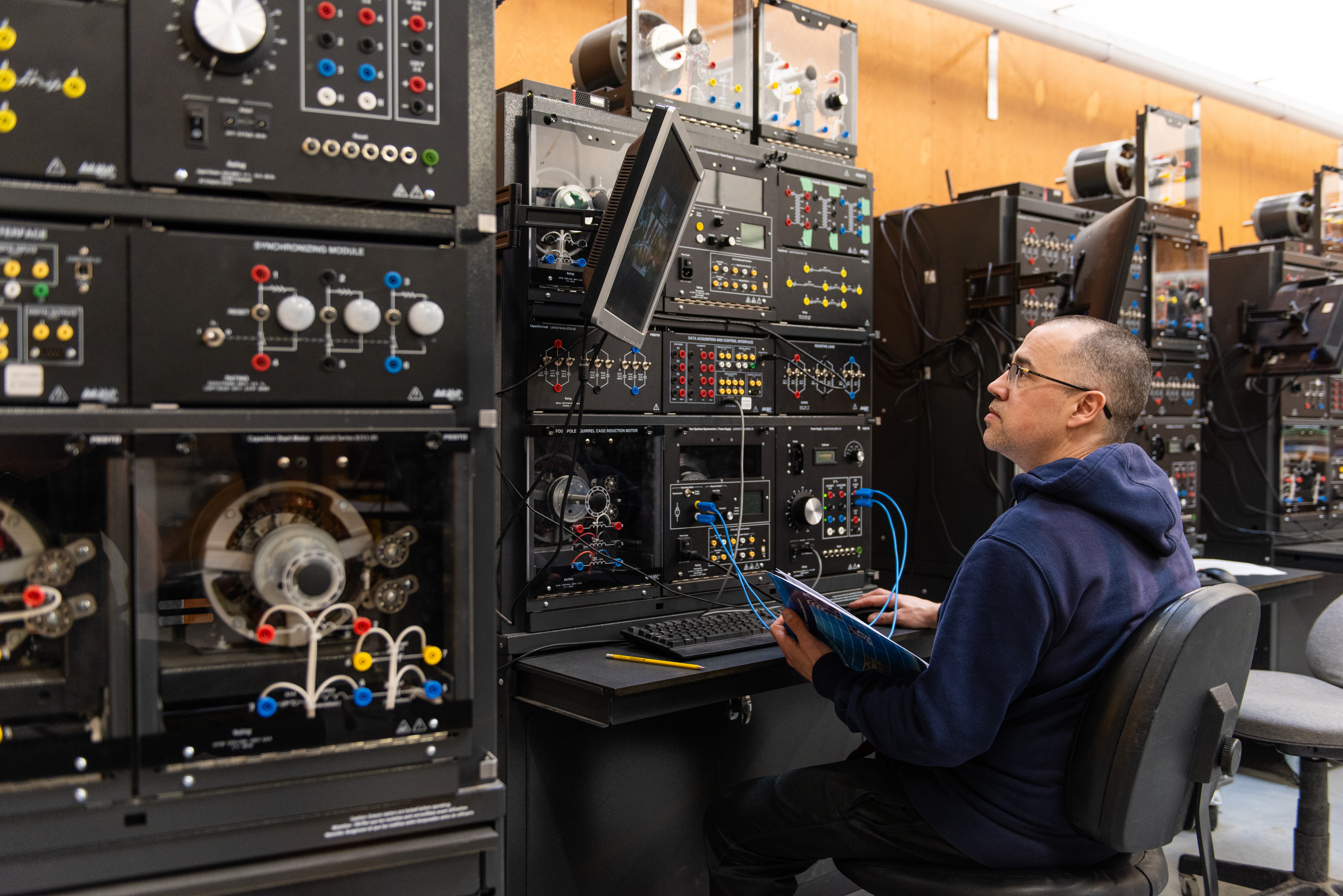
In the Electrical Foundation program you’ll learn the skills to assemble, install, test, troubleshoot and repair electrical wiring; control devices such as switches, relays, and circuit breaker panels; and you’ll splice, join, and connect wires to form circuits and more. Electricians use their skills in everything from lighting to climate control and communications systems.
In the Electrical Foundation program, studies are focused on direct current (DC) electricity. You will learn
- Fundamentals of electricity and how it is electromagnetically induced
- DC circuitry, resistance, and circuit analysis
- Use of meters and test equipment
- Read and interpret prints and drawings
- Basic motor control and industrial power electronics
- Interpretation and application of the Canadian Electrical Code (CEC)
The Electrical Foundation program is heavily focused on math and physics. Due to the nature of the CEC, its content will be covered daily (approximately 1 to 2 hours per day).
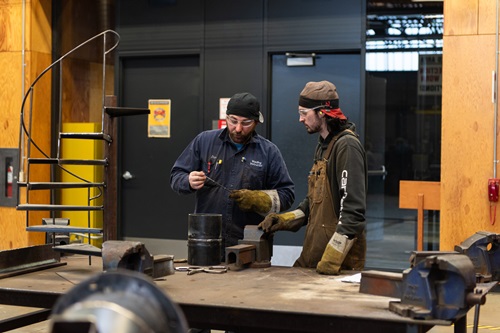
As well as learning the theory of electricity, the program includes many opportunities for hands on learning. This practical experience is invaluable for preparing you for the electrical trade.
Become an Apprentice
This foundation program will provide entry level practical skills and academic knowledge to prepare you to begin the apprenticeship pathway as either a Construction Electrician or an Industrial Electrician. You do not need an employer sponsor to participate. In fact, one of the main reasons to complete a foundation program is to gain experience and familiarity with the trade, giving you a competitive advantage to finding an employer to hire you as their apprentice.
The Electrical Foundation program is unique in that it provides core training for two Red Seal trades, allowing you to later specialize as either a Construction Electrician or an Industrial Electrician. There also is the opportunity to be dual Red Seal ticketed by completing the specialized 4th level training, and work based training hours, for both programs.
Upon successful completion of the foundation program, you will receive credit with the SkilledTradesBC for Level 1 technical training in Electrician, Common Core. Once you are officially registered as an apprentice with SkilledTradesBC, you will then be able to complete the work based training hours (on the job training) and higher levels of apprenticeship training for your chosen electrical trade.
Apprenticeship programs provide a unique approach to post-secondary education, combining classroom based learning (known as technical training) with on the job training. This enables you to “earn while you learn,” significantly reducing the need for student debt and building your career NOW instead of waiting until you’ve completed your education.
Governing bodies
Courses
Typical Offerings
| Timing | Fall/Spring Only, Every Year |
|---|---|
| Locations | Prince George |
Description
In the Electrician Foundation program, students learn the skills to apply circuit concepts, perform safety related functions, use measuring and testing equipment, interpret plans, drawings and specifications, use the Canadian Electrical Code (CEC), install and maintain consumer/supply services and metering equipment, install and maintain protection devices, low voltage distribution systems, bonding, grounding and ground fault detection systems, raceways, cables and enclosures, branch circuitry, motor starters and controls, communication systems, and use communications and mentoring techniques.Entry Requirements
Spring 2027 Intake and Onwards
For applications to the Spring 2027 intake (January start), you must meet the following requirements:
Note: WorkSafe BC regulations apply to all Trades programs; students are expected to adhere to these regulations. While in the shop, all students must wear and use appropriate personal protective equipment (PPE) for the area in which they are working and follow the safe work procedure which applies to the task. This may include, but is not limited to CSA certified safety footwear, safety glasses, hearing protection, and any other PPE dictated by common sense and/or WorkSafe BC regulations. Students must be aware they are working in an industrial setting with potential hazards and remain aware of their surroundings at all times. If a safety concern is identified, you must report this to your instructor immediately.
Need help meeting these requirements? Check out our options.
Program Specific Recommendations
The following courses or their equivalent, with a minimum grade of "C":
- English Language Arts 10, or
- Foundations of Math 10, or
- Physics 11, or
This course may include an off-site practical experience component. The scale of the component is dependent on the state of the local economy and community partnerships.
CTC Option
High school students may be eligible to take this program. See your school counsellor for details.
Limited admission
If there is room in the program, you will be accepted once you have met all the admission requirements. This is called “first qualified, first accepted”. If you qualify after the program is full, you will be put on a wait list.
| Type | Campus | Starts | Status |
|---|---|---|---|
|
|
|
Applications Closed |
|
|
|
Open for Applications |
|
|
|
Open for Applications |
|
|
|
Applications Closed |
|
|
|
Open for Applications |
Invest in your future
The estimated cost for this program is $3,200*.- Tuition: $2,071
- Student fees: $658
- Medical/Dental Fee (Fall semester only): $260
- Tool Deposit: $200 (Refundable)
*Please note these fees are for the FALL intake. These costs are an estimate and do not include books. Student fees vary by campus. Check the for more details.
Books for this program can be purchased from the bookstore.
Paying for college
We're here to help. You can apply for scholarships and bursaries through CNC. We can also help you find loans and other funding.
Salaries and employment
Looking for a job? Check the student employment opportunities or trades training job board.